Water Extraction & Removal
Pumping and extracting standing water from the basement.
MH Restoration provides flooded basement remediation across confirmed service areas in Santa Rosa, with the full nine-service scope and honest limits. The cleanup is the same across California. What changes here is the local context, which we walk through below.
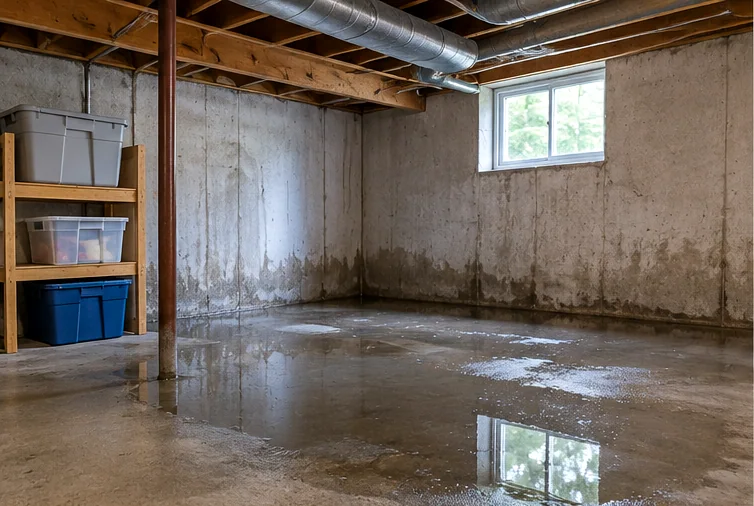
Santa Rosa and the surrounding Sonoma County area see winter atmospheric rivers through the Russian River basin, along with a post-wildfire context in several watersheds. Basement losses here reflect that mix, with both storm and plumbing calls year-round. MH Restoration provides flooded basement remediation across confirmed service areas in Santa Rosa, with the full nine-service scope. Availability for your street address is always confirmed by phone.
The cleanup covers extraction, moisture inspection, structural drying, selective material removal where it is needed, cleaning and sanitization or the stricter sewage process when it applies, contents handling and the planning of reconstruction. We keep the scopes separate so an estimate is honest and so the work follows what the basement actually needs rather than a template.
The remediation work is the same across California. What changes is how water reaches a basement in the first place, which is why the local notes below are worth reading.
The Russian River system drains much of Sonoma County and has a long documented history of winter flooding during atmospheric-river events. Lower areas along the river and its tributaries see repeat problems. A Santa Rosa basement is not necessarily on a floodplain, but regional runoff shapes the water we see in winter.
Parts of Sonoma County have been affected by major wildfires in recent years. Rain after fire can produce faster runoff and sediment-laden water in affected watersheds. If a property sits below a recent burn scar, cleanup assumptions include that possibility.
Santa Rosa has an older downtown core and newer surrounding neighborhoods. Basement and below-grade room types vary. The scope follows what the property actually has.
Sonoma County has a visible restoration market advertising storm and water damage work. That reflects real demand. Quality in this market comes from documentation and drying verification, not from the size of the company behind the work.
These are patterns from the kinds of calls we take in the Santa Rosa area. They are not diagnoses of your property, which only on-site assessment can confirm.
Atmospheric-river events can drop days of heavy rain in sequence, saturating soils and raising the Russian River at the same time. Basement calls cluster around those windows.
Older housing in the downtown and surrounding neighborhoods brings mixed-material walls, plaster, and sometimes original hardwood. Each requires its own drying and salvage decision rather than a one-size approach.
Water from a burn-area watershed can carry ash and sediment, which changes cleaning and material decisions. That is a different job from the same volume of plumbing water.
In rebuilt areas, the insurance picture can be complicated by the history of the property. Documentation at the start of the cleanup helps keep the record straight.
We rule out electrical, gas, structural and contamination hazards on the phone first, and get the right trade in front of the problem.
Extraction removes standing water, with pace managed for deep-water situations where outside pressure matters.
Inspection finds hidden moisture and documents baseline readings.
Removal for materials that cannot be dried or cleaned, based on readings and water category.
Drying runs with monitoring until readings reach a dry standard.
Cleaning for clean-water jobs. Sewage cleanup for contaminated events.
Contents work and, after drying is verified, reconstruction.
Pumping and extracting standing water from the basement.
Drying walls, floors and framing to a verified dry standard.
Safe cleanup of contaminated water and affected porous materials.
Removing silt and residue, then sanitizing where warranted.
Finding hidden moisture with meters and infrared screening.
Selective removal of materials that cannot be dried or cleaned.
Inventory, cleaning and salvage of belongings affected by the flood.
Rebuilding after drying is verified and cleaning is complete.
Cleanup and drying after a sump system failure flooded the basement.
Santa Rosa sits within Sonoma County, which shapes the regional water-source assumptions we bring into the first call. Coverage planning in this county also includes surrounding communities; whether service is available at a specific address is always confirmed on the phone.
Storm, plumbing, sewer, sump or groundwater. The source changes the cleanup downstream.
What homeowners, NFIP, sewer-backup and sump-overflow policies usually cover by water source.
How a basement is actually proven dry, with readings and a drying log, not appearance.
Coverage in Santa Rosa is confirmed by phone. A city appearing in the directory indicates coverage planning, not a guaranteed crew at every property. Call with your ZIP and we will tell you honestly what is available for your street.
They vary. Several of the common patterns for Santa Rosa are described in the local context section above, including the ways water typically reaches a basement in the surrounding area. Your property may fit one of those or a different source entirely, which the first call narrows down.
No. Our scope is remediation of the water damage. Plumbing, drainage, waterproofing, sump pump replacement and sewer line repair are separate trades. We coordinate with them so the work happens in the right order.
It depends on the loss. Many basements reach a dry standard within several days of extraction. Finished basements with removed drywall, insulation or flooring need additional time for reconstruction before full use returns. The drying log tells you when the structure is actually ready for the rebuild.
Yes, when it is proven by moisture readings compared to reference readings in unaffected areas, not by appearance. Our drying verification guide walks through what the log should show and the signs that drying is not done yet.