Flooded Basement Help, Safety, Costs & Insurance
Clear, source-backed guidance for homeowners making decisions after water enters a basement. This resource page supports—but does not replace—professional assessment and the nine service pages.
What Should You Do When Your Basement Floods?
Electrical equipment, outlets, cords and appliances can make standing water lethal. Do not reach a submerged breaker or enter the area to unplug equipment. Stay away if you smell gas, see structural instability or suspect sewage contamination.
For immediate dangers contact the relevant utility or emergency services rather than beginning DIY extraction.
- Keep occupants and animals away from affected areas.
- Stop an accessible water source only if entirely safe.
- Document visible damage from a safe position.
- Ask the appropriate licensed trade to deal with active pipe, sewer, pump or electrical problems.
- Contact a flood remediation specialist about water removal, materials and drying.
Match the Symptom to the Next Question
| Observed problem | Possible source | What to ask |
|---|---|---|
| Wet floor after a winter rain | Runoff, foundation penetration, window well | What is the entry route? Is the outside ground still saturated? |
| Wet floor on a dry day | Pipe, water heater, appliance or drain | Has the supply or drain problem been corrected safely? |
| Backflow at floor drain | Potential sewer or drain problem | Is the water contaminated? Which porous materials were exposed? |
| Water at sump pit | Pump failure, blockage, overload or outage | Has a pump specialist diagnosed the system? What materials remain wet? |
| Musty smell after cleanup | Concealed moisture or damaged materials | Are there moisture readings from the floor and wall cavities? |
Remediation vs. Restoration vs. Prevention
Water extraction takes out accessible liquid. Remediation addresses the affected space and materials through appropriate cleaning, drying and removal decisions. Restoration or reconstruction may repair finishes after mitigation is complete.
Prevention is different again: a plumber, pump technician, foundation or drainage specialist may be needed to fix the source so water does not return. Our selected sump-pump service is cleanup only—not pump repair.
Compare the nine services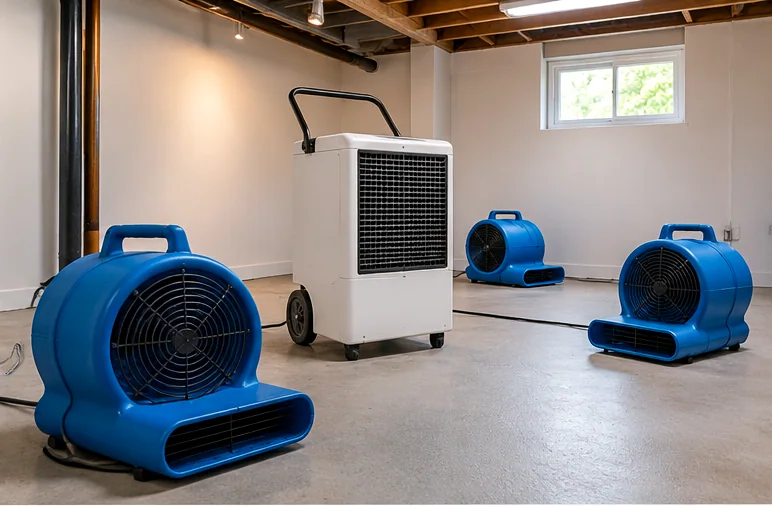
What Can Stay and What Might Need Removal?
| Basement material | Questions to resolve |
|---|---|
| Concrete slab | Are coatings, adhesives or concealed floor layers retaining moisture? |
| Gypsum and insulation | What was the water category, how far did water travel and can the assembly dry adequately? |
| Carpet and padding | Was there sewage or outdoor flood contamination? Can each layer be cleaned and dried? |
| Furniture and papers | What should be inventoried, stabilized, cleaned or conservatively discarded? |
| Electrical equipment | Has a qualified specialist inspected exposed components before energizing? |
Why Do Basement Flood Cleanup Estimates Vary?
Some costs arise because the basement is difficult to access; others reflect contamination, trapped moisture or work needed to remove unsalvageable materials. A wet concrete storage room is not equivalent to a fully finished basement with carpeting, drywall and contents. A sound estimate identifies what is included and excluded.
Immediate mitigation
Assessment, extraction, equipment setup, contaminated debris or affected material handling.
Drying and documentation
Dehumidification, air movement where appropriate, monitoring visits and moisture records.
Repair and other trades
Reconstruction, permit work, plumbing, sump repair and waterproofing may be separate projects.
Ask for itemized scope, exclusions and a process for handling changes if hidden damage is discovered. Be cautious about relying on generic per-square-foot prices without site details.
Does Insurance Cover a Flooded Basement in California?
There is no one answer. In general, standard homeowners coverage does not include overland flooding, while sudden accidental plumbing losses may be assessed under different provisions. Sewer backups and sump overflows can involve optional endorsements. Under the National Flood Insurance Program, basement coverage is limited, and many finished improvements and personal belongings are excluded.
Document the water source, photographs taken safely, estimate, material disposition and expenses. Speak with the insurer about the specific policy and deductible. A remediation company cannot promise a claim will be paid.
How Do You Know a Basement Is Ready for Repairs?
Ask for a review of what was affected, what was cleaned or removed, which areas remain inaccessible and what moisture observations support the decision to install new finishes. A floor or wall can look dry before hidden materials are ready. Not every job needs the same equipment or the same number of drying days.
The ANSI/IICRC S500 standard provides an industry reference for professional water-damage restoration procedures, including safety, inspection, building materials, drying and documentation. It is not a certification claim about MH Restoration unless the business provides proof.
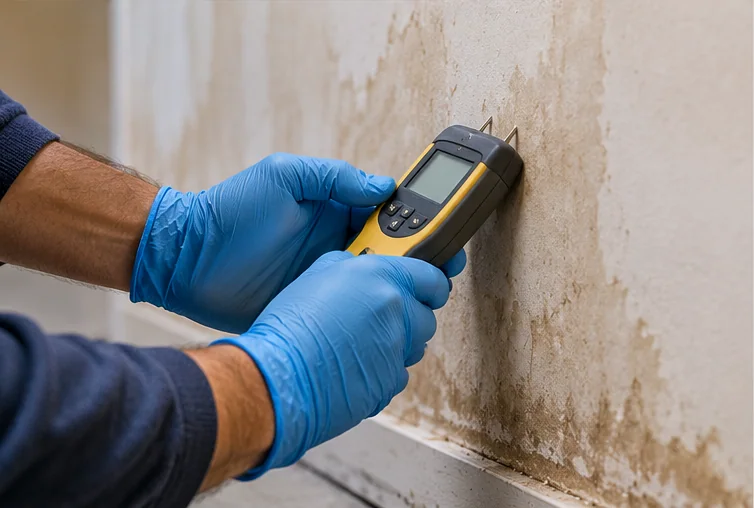

Inspection and drying are related but distinct steps. Ask whether the scope includes follow-up measurements and a final review.
Questions People Ask After Basement Flooding
What is flooded basement remediation?
Flooded basement remediation is the assessment, controlled water removal, material-specific drying, cleaning and damage-recovery work needed after water enters a basement. The full scope depends on source, contamination and affected materials.
Who should I call first if my basement floods?
If there is an immediate electrical, gas or structural danger, keep out and contact emergency services or the appropriate utility. A qualified remediation company can discuss the subsequent cleanup and drying.
Is it safe to enter a basement with standing water?
Not until electrical and other hazards have been ruled out. Do not enter water near outlets, appliances, cords or an electrical panel.
How quickly should flood cleanup begin?
As soon as it is safe. Delay may increase material damage and the risk of microbial growth, but safety and water-source control come first.
What is the difference between extraction and structural drying?
Extraction takes out accessible liquid water. Structural drying addresses residual moisture in wood, gypsum, concrete, subfloor and cavities using an appropriate plan and measurements.
Can floodwater affect a basement even if it looks clean?
Yes. Outdoor floodwater may contain contaminants; even clean-water plumbing leaks can wet hidden materials. Appearance is not a reliable classification.
What can be saved after basement flooding?
It depends on the source, contamination, time wet and material. Concrete and some hard items may be recoverable, while carpet padding, porous insulation or sewage-exposed items may require removal.
Does homeowners insurance cover basement flooding?
It depends on the cause and policy. Ordinary homeowners policies generally exclude external floodwater, while sudden pipe losses or water-backup endorsements may be treated differently. NFIP basement coverage has important limits.
How much does basement remediation cost in California?
A reliable price needs an assessment. Water volume, affected square footage, contamination, equipment, materials, contents and reconstruction all affect the written scope.
Do you repair sump pumps?
No. MH Restoration’s listed sump-related service is cleaning and drying after a sump-pump failure, not repairing or replacing the pump.
Reference sources: EPA safety and cleanup · IICRC S500 · California DWR conditions · FEMA basement flood hazards · California DOI · Geographic details describe regional conditions, not a hazard determination for an individual property.