Water Extraction & Removal
Pumping and extracting standing water from the basement.
MH Restoration provides flooded basement remediation across confirmed service areas in Fresno, with the full nine-service scope and honest limits. The cleanup is the same across California. What changes here is the local context, which we walk through below.
Fresno is at the heart of the San Joaquin Valley. Basement losses here are often less about dramatic winter storms and more about short, intense rain events, plumbing failures and the year-round reality of appliance and supply-line leaks in a hot climate. MH Restoration provides flooded basement remediation across confirmed service areas in Fresno, with the full nine-service scope. Availability for your street address is always confirmed by phone.
The cleanup covers extraction, moisture inspection, structural drying, selective material removal where it is needed, cleaning and sanitization or the stricter sewage process when it applies, contents handling and the planning of reconstruction. We keep the scopes separate so an estimate is honest and so the work follows what the basement actually needs rather than a template.
The remediation work is the same across California. What changes is how water reaches a basement in the first place, which is why the local notes below are worth reading.
Fresno gets most of its rain in winter, with totals usually lower than coastal counties. Short, intense storms and spring runoff drive most of the storm-related basement calls. The 2023 southern San Joaquin Valley flooding, including Kings River and Tulare County impacts, affected neighboring areas and is a useful reminder that modest average rainfall does not mean low event-year exposure.
Dry weather does not stop pipes from breaking. A lot of Fresno basement calls in summer involve a burst supply line, a failed water heater or an appliance connection that let go overnight. The cleanup is a clean-water job, usually, and the drying time tends to be shorter because conditions are warm and dry.
Fresno has older homes with real basements and newer homes without them. Some homes have lower-level utility rooms somewhere between a basement and a crawl space. The scope follows what is actually there. We do not describe a crawl-space cleanup as a basement job to pad a quote.
Many Fresno basements and lower rooms are used for seasonal storage, sometimes including farm equipment, boxes and tools. When water reaches those, contents work often starts with sorting and documenting before anything is moved.
These are patterns from the kinds of calls we take in the Fresno area. They are not diagnoses of your property, which only on-site assessment can confirm.
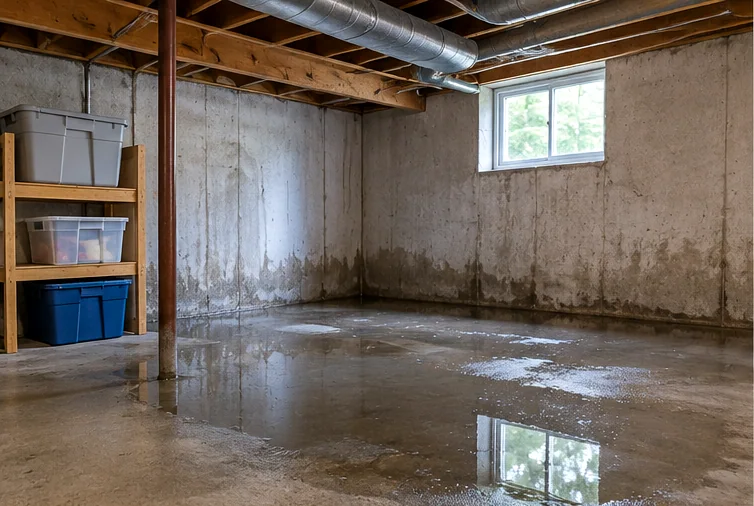
A broken supply line that ran overnight into a finished basement can reach drywall, flooring and insulation while you were asleep. Prompt extraction and verified drying are the difference between dried-in-place materials and a mold job six weeks later.
Fresno basements commonly house the water heater and furnace. Water near either one is an electrical and gas safety question first, which we handle by phone before anyone steps into the water.
Older Fresno homes with true basements can take runoff from a short, intense storm. The water is usually dirtier than plumbing water, which changes material decisions.
Supply-line bursts and appliance failures may fall under a homeowners policy, while external flooding generally does not. Our guides on this site walk through the water-source insurance matrix so you can ask your insurer the right question.
We rule out electrical, gas, structural and contamination hazards on the phone first, and get the right trade in front of the problem.
Extraction removes standing water, with pace managed for deep-water situations where outside pressure matters.
Inspection finds hidden moisture and documents baseline readings.
Removal for materials that cannot be dried or cleaned, based on readings and water category.
Drying runs with monitoring until readings reach a dry standard.
Cleaning for clean-water jobs. Sewage cleanup for contaminated events.
Contents work and, after drying is verified, reconstruction.
Pumping and extracting standing water from the basement.
Drying walls, floors and framing to a verified dry standard.
Safe cleanup of contaminated water and affected porous materials.
Removing silt and residue, then sanitizing where warranted.
Finding hidden moisture with meters and infrared screening.
Selective removal of materials that cannot be dried or cleaned.
Inventory, cleaning and salvage of belongings affected by the flood.
Rebuilding after drying is verified and cleaning is complete.
Cleanup and drying after a sump system failure flooded the basement.
Fresno sits within Fresno County, which shapes the regional water-source assumptions we bring into the first call. Coverage planning in this county also includes surrounding communities; whether service is available at a specific address is always confirmed on the phone.
Storm, plumbing, sewer, sump or groundwater. The source changes the cleanup downstream.
What homeowners, NFIP, sewer-backup and sump-overflow policies usually cover by water source.
How a basement is actually proven dry, with readings and a drying log, not appearance.
Coverage in Fresno is confirmed by phone. A city appearing in the directory indicates coverage planning, not a guaranteed crew at every property. Call with your ZIP and we will tell you honestly what is available for your street.
They vary. Several of the common patterns for Fresno are described in the local context section above, including the ways water typically reaches a basement in the surrounding area. Your property may fit one of those or a different source entirely, which the first call narrows down.
No. Our scope is remediation of the water damage. Plumbing, drainage, waterproofing, sump pump replacement and sewer line repair are separate trades. We coordinate with them so the work happens in the right order.
It depends on the loss. Many basements reach a dry standard within several days of extraction. Finished basements with removed drywall, insulation or flooring need additional time for reconstruction before full use returns. The drying log tells you when the structure is actually ready for the rebuild.
Yes, when it is proven by moisture readings compared to reference readings in unaffected areas, not by appearance. Our drying verification guide walks through what the log should show and the signs that drying is not done yet.