How Serious Is Basement Water Damage? The Real Severity Factors
How Do You Know How Serious Basement Water Damage Is?
The seriousness of basement water damage is not decided by how deep the water is. A basement with one inch of sewage can be more serious than a basement with six inches of clean water that was removed in an hour. The factors that actually decide severity are the water source and category, the duration materials stayed wet, the materials that were affected, the hidden cavities moisture may have reached, and whether electrical or structural components were touched.
The IICRC S500 Standard for Professional Water Damage Restoration covers how water damage is evaluated across these dimensions. It is what professional restoration providers use to size the scope of work, and it is a more reliable yardstick than depth alone.
What are the Water Damage Categories?
Water category is the first severity variable. The IICRC S500 categorizes water by its sanitary condition at the time of loss:
| Category | What it is | Typical sources | Implication |
|---|---|---|---|
| Category 1 | Clean water with no substantial contaminants | Broken supply line, overflowing bathtub with clean water, rainwater that has not contacted contaminants | More materials can usually be dried and kept |
| Category 2 | Significantly contaminated water (gray water) | Dishwasher or washing machine overflow, aquarium leak, water that passed through Category 1 materials for extended time | More materials need removal; cleaning is more involved |
| Category 3 | Grossly contaminated water (black water) | Sewage backup, floodwater from outside, sea water, certain long-standing gray water | Porous materials usually come out; PPE and containment required |
Water can change category over time. A Category 1 clean-water leak left sitting for days against drywall and in warm conditions can degrade to Category 2 or worse as contaminants develop and cross from the environment into the water. Time wet is itself a severity factor.
What Factors Make Basement Water Damage Serious?
| Attribute | Why it matters | What raises severity |
|---|---|---|
| Water source | Determines category and contamination | Sewer, external flood, long-standing leak |
| Time wet | Longer exposure drives material damage and mold risk | More than 24 to 48 hours (EPA mold-risk threshold) |
| Area affected | How far water migrated through the building | Water that reached finished rooms or climbed walls |
| Building materials | Porous materials absorb and hold moisture | Drywall, insulation, carpet padding, subfloor affected |
| Hidden cavities | Moisture out of sight does not evaporate on its own | Water inside wall cavities, under flooring, behind cabinets |
| Structural condition | Possible safety hazards | Any movement, bowing, cracking or ceiling sag |
| Electrical exposure | Affects safe access and further use | Water in contact with outlets, panels or wiring |
| Contents | Belongings salvage and documentation needs | Stored items in the water zone |
| Finished vs unfinished | Finished basements hide moisture longer | Carpet, drywall, cabinetry, built-ins affected |
What are the Warning Signs of Serious Basement Water Damage?
Some signs point beyond a simple cleanup toward a bigger problem. If you see any of these, assume higher severity and get a professional assessment before doing anything irreversible.
- Standing water that returned after you removed it, which points at active source, groundwater pressure or sewer problem.
- A bowing or leaning basement wall, horizontal cracking in masonry, or any new structural crack.
- Sagging ceiling beneath an upstairs water loss.
- Water dripping or running where none was visible before, from an unknown source.
- Visible mold already growing on walls, ceiling or floors.
- Persistent musty smell after surface drying.
- Efflorescence (white salt deposits) on masonry walls, which indicates ongoing moisture passage.
- Soft or spongy floor areas, which can indicate subfloor damage.
- Peeling paint, bubbling finish, or warping baseboards after the surface looks dry.
- Water that entered appliances, HVAC, water heater or electrical panel.
How Can Water Damage Hide Behind Walls and Floors?
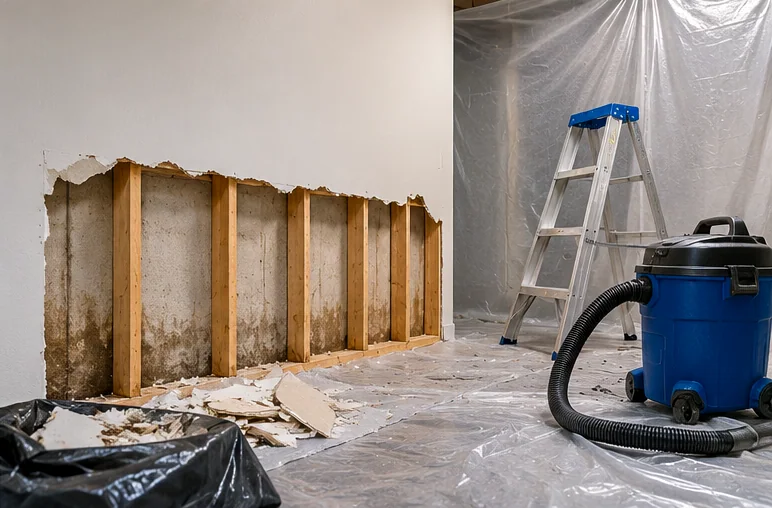
This is where severity assessments by appearance go wrong. A wall can be bone dry at the paint surface and still have wet insulation, wet framing bottoms and wet drywall backing. A floor can feel fine while the subfloor and the joists beneath it are losing strength to moisture.
The reason is that materials dry from the outside in. Air movement reaches the surface first, then slowly penetrates into denser or deeper materials. Moisture measurement with a meter at the right depth is the only honest way to know. Infrared cameras can flag temperature differences that suggest damp areas, but a thermal pattern is not proof of water; a meter confirms.
Our moisture inspection service covers how this is actually done. Our drying verification guide covers what evidence should exist before a basement is called dry.
How Do You Decide Whether to Get a Professional Assessment?
Severity drives the decision. The rule of thumb that works: if any of the warning signs apply, if the water was Category 2 or 3, or if the water was there longer than a few hours before cleanup started, a professional assessment is worthwhile. The cost of the inspection is usually small compared to the cost of missing hidden damage and finding it in a month as a mold job.
The IICRC S500 structure covers evaluation of water damage conditions, including contamination, drying and affected materials. EPA guidance recommends removing materials that cannot be cleaned and dried safely, particularly after contaminated flooding. Together these are the professional benchmarks that back a proper assessment.
When you are ready, start at the services page or call directly. The first conversation is where we work out whether an assessment is actually needed or whether this is a smaller case that does not require one.
Frequently Asked Questions
How do you tell how serious water damage in a basement is?
By the water source and category, how long materials stayed wet, which materials were affected, hidden cavities moisture may have reached, and whether electrical or structural components were touched. Depth alone is not the right yardstick. The IICRC S500 standard covers how professional assessments evaluate these factors.
What is Category 1, 2 and 3 water damage?
Category 1 is clean water with no substantial contaminants, such as a broken supply line. Category 2 is significantly contaminated gray water, such as dishwasher or washing machine overflow. Category 3 is grossly contaminated black water, such as sewage backup or external floodwater. The category drives how many materials can be kept versus removed.
Can water damage hide behind basement walls?
Yes, and this is the most common reason severity assessments by appearance are wrong. A wall can be dry at the paint while insulation, framing bottoms and drywall backing are still wet. Materials dry from the outside in, so a dry surface does not prove a dry assembly. Moisture meter readings at the right depth are the honest check.
Does one inch of water in a basement count as serious damage?
It depends on the category, how long it sat, what materials it reached, and whether it hit anything electrical or structural. One inch of sewage is more serious than six inches of clean water removed within an hour. Depth is just one input.
Is visible mold a sign of serious basement water damage?
Yes, and it usually means the moisture was present long enough for growth to establish. That changes the remediation approach beyond standard cleanup; mold remediation has its own process and often its own specialist.
How long after a basement flood is the damage considered serious?
EPA guidance treats the 24 to 48 hour window as the point past which a wet structure should be treated as at risk for mold. Beyond that window, severity rises regardless of the original water category, because materials have had time to absorb moisture deeper and conditions favor microbial growth.