Short-duration heavy rain
Intense rainfall can overwhelm local drainage routes and send water toward lower entrances and enclosed spaces.
Flooded basement remediation in San Diego County begins with safe assessment and an address-level service check. Browse the published cities, their ZIP references, related flood cleanup services and local conditions that can change water-damage work.
From older central neighborhoods to coastal and inland communities, the property slope, storm-drain layout and room elevation change how water arrives.
Intermittent intense rainfall, urban runoff and creek drainage is a useful regional context, not an individual property diagnosis. For an actual cleanup decision, identifying the water source, contamination, building construction and timing matters more than labeling a neighborhood high or low risk.
If water is entering a basement now, stay away from energized equipment, sewage and visibly compromised structural elements; request appropriate utility or professional assistance before walking into floodwater.
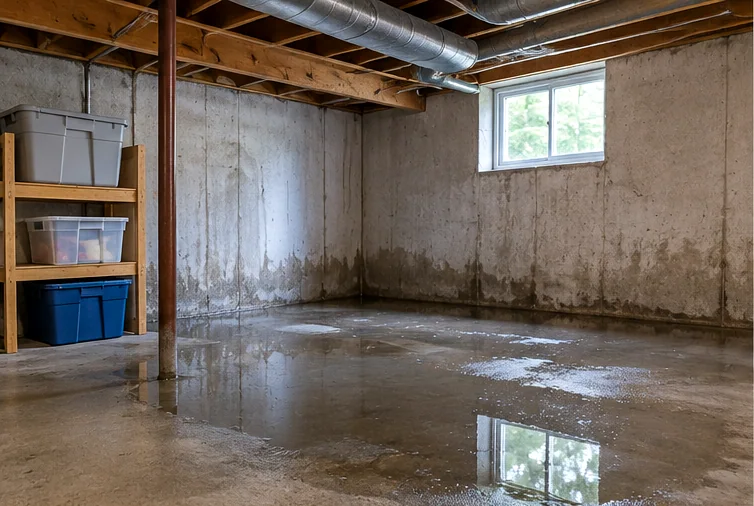
Intense rainfall can overwhelm local drainage routes and send water toward lower entrances and enclosed spaces.
Historical flooding in the Chollas Creek watershed illustrates why nearby drainage geography matters, without proving any individual address is flood-prone.
Plumbing failures and sewer backups create different contamination and insurance questions than outdoor floodwater.
None of these regional risks means that every home in the county experiences flooding. The cause at one address must be inspected.
The statewide homepage explains the complete recovery process. The nine specialized services below cover distinct parts of the work, including water extraction, drying, cleanup, material removal and reconstruction.
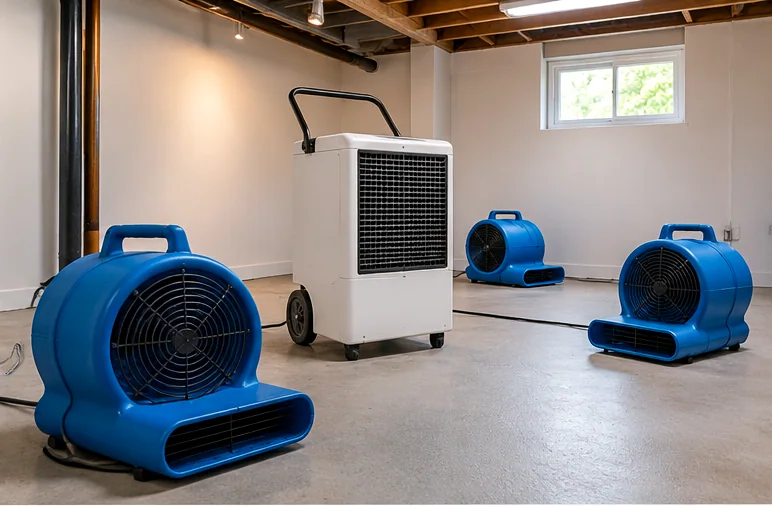
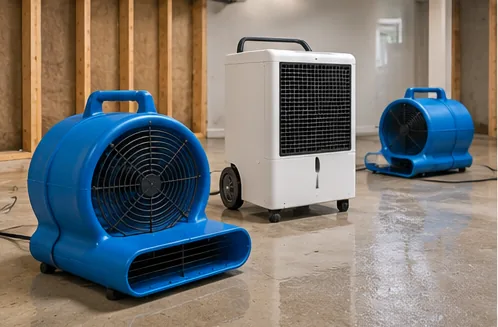
Illustrative drying equipment—not a claimed local jobsite photograph.
The ZIP codes below are used as local postal references. ZIP routes can cross city or county lines, and service availability is confirmed for each property address. ZIPs and legal county boundaries do not always match exactly. An address still requires service-availability confirmation by phone.
No standalone ZIP-code landing pages are being created.
Use these pages to find each locality's ZIP references, relevant safety information and the nine related remediation services. Published locations are not claims of branch offices.
Whether a basement has one damp corner or standing water across several rooms, the scope is driven by water category, affected materials, depth, time wet and access. Ask for separate line items for extraction, drying, monitoring, material removal, contents and reconstruction.
Policy treatment is not decided by the ZIP alone. External floodwater is generally excluded from typical homeowners coverage; a burst pipe or sewer/sump backup may involve different coverage terms or endorsements.
When the source is not obvious, a source evaluation is more useful than assuming the closest river, storm or drain caused the loss.
Searching for flooded basement remediation in San Diego County should lead to useful local context, not a page that changes only its city name. This county guide references 90 ZIP codes (91902, 91910, 91911 and 87 more) from the provided service-area list. A ZIP identifies a postal area; it does not establish a flood zone, a technician's location, or a guaranteed arrival time. MH Restoration asks callers to confirm their property address and availability.
The City of San Diego documented severe January 2024 flooding associated with the Chollas Creek watershed. That historical event does not establish that an individual home is in a mapped floodplain. Urban canyon drainage, creeks, sloping lots and sudden intense rainfall can create different exposure patterns across San Diego County. A lower-level room can also flood during dry weather because of a failed supply line. In San Diego County, this is a starting point for questions rather than a diagnosis. Is this stormwater entering from outside, or wastewater coming back through a drain? The answer changes the restoration plan much more than the nearest landmark.
People search for basement flooding remediation, basement flood damage cleanup, or emergency basement flood remediation when they need to know who can stop damage from spreading. The first objective is safety and source control, followed by estimating liquid water, concealed moisture, contamination and the condition of finishes. In a finished lower level, water can travel behind drywall and along the floor assembly. In an unfinished storage basement, the first concerns may be utilities, cartons, appliances and an exposed slab.
Have the property ZIP ready (for example, 91902) and describe the source, approximate time of discovery, whether water is still rising, and any sewage, electrical or gas concerns. A caller should not enter potentially energized water to take photographs or measure depth. If water reached a furnace, panel, or other mechanical system, qualified trades may need to inspect before use. Never assume that running a fan over the surface means the assembly underneath is dry.
For an accurate response, distinguish between remediation of the existing damage and repair of the cause. A drying crew may remove standing water and address wet materials; a plumber, pump technician, drainage contractor or other appropriately licensed specialist may still be needed to prevent recurrence. Request a written scope that spells out what is included and excluded rather than relying on a general label such as “flood service.”
Further reading: U.S. EPA flood cleanup · California flood management. These resources supply general guidance; they do not confirm the cause of water at an individual property.
The same visible puddle can call for different next steps. These examples are possibilities to investigate, not remote diagnoses.
Water entering through a slab or foundation needs a separate source-correction plan, even after drying. Repeated seepage and hidden moisture merit professional assessment.
Track possible entry at below-grade doors, window wells, foundation joints and nearby surface drainage. Surface runoff can carry soil and pollutants; it should not be treated automatically as clean tap water.
The affected rooms may have clean-looking water, but concealed insulation or floor cavities can still be wet. Identify the source and ask the appropriate licensed trade to repair it before rebuilding.
Keep people away from contaminated material. The source may involve a building drain or public system. Inspection and cleanup require controls beyond running household fans.
Do not decide based on odor, color or the weather alone. Water can flow across a slab from a concealed pipe break, rise through a floor drain, run under a door, or pass through a foundation joint. A careful assessment considers the probable source, contamination, duration, all affected rooms, adjacent cavities and any water that remains outside the structure.
Documentation should explain why the situation calls for extraction alone or additional structural drying and dehumidification, hidden-moisture testing or selective material removal. If you suspect sewage, do not assume ordinary household disinfection will make porous materials safe.
Regional context: Urban canyon drainage, creeks, sloping lots and sudden intense rainfall can create different exposure patterns across San Diego County. A lower-level room can also flood during dry weather because of a failed supply line.
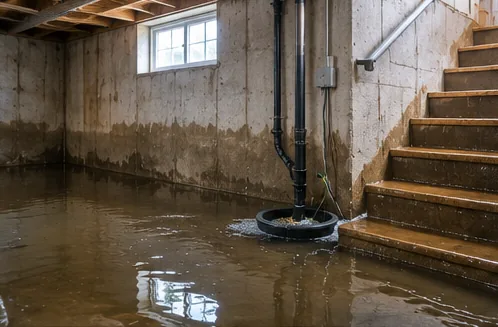
Material decisions affect both the safety of the cleanup and the repair estimate. There is no reliable one-height drywall-cutting rule for every type of basement flood.
| Material / contents | Questions that guide cleanup or removal |
|---|---|
| Stored possessions | Photographs, books, textiles, furniture and electronics each need material-specific decisions; do not energize submerged equipment. |
| Carpet and pad | Separate the carpet face from the absorbent pad and subfloor. Contamination, backing damage and time wet are central to the salvage decision. |
| Drywall and insulation | Look beyond the visible stain: the cavity and insulation can hold moisture. Material removal depends on source, access, duration and condition. |
| Concrete and masonry | Mineral surfaces may be cleaned and dried, but finishes, adhesives and covered layers require their own assessment. |
| Wood framing and trim | Inspect swelling, finish condition and moisture measurements; do not assume all framing must be removed or all wood is reusable. |
These are general assessment considerations, not promises that a particular item can be saved. Water source, duration, contamination, assembly and observed damage determine the work. If old paint, suspect flooring or insulation could involve lead or asbestos, ask about proper specialist evaluation before disturbance.
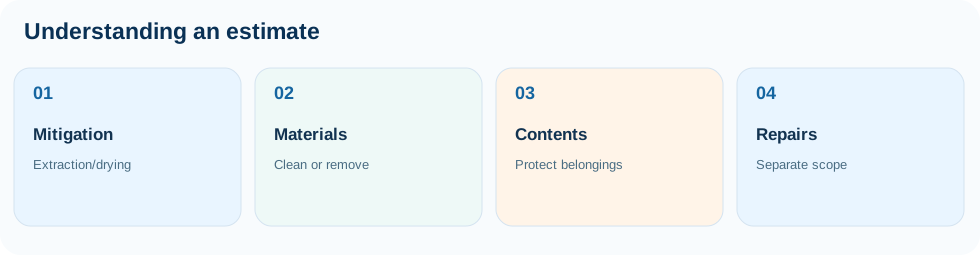
Clear estimating is as important as the first extraction visit. Ask for work that reflects what the site actually needs.
Look for emergency assessment, standing-water extraction, containment where relevant, equipment setup, monitoring visits, contents moving, affected material removal and disposal. Equipment days should be explained in terms of a drying plan, not a fixed number applied to every home.
Replacing trim, insulation, drywall, flooring or cabinetry may require a separately authorized reconstruction scope. Drying should be assessed before closing wet cavities. Clarify who is responsible for permits and licensed trades where required.
A sudden, accidental supply-line loss, exterior floodwater, sewer backup and repeated seepage are not interchangeable policy events. Ask the insurer which policy, endorsement, deductible and exclusions apply. Do not rely on a contractor's coverage promise.
Further reading: California insurance guide · California contractor license verification. These resources supply general guidance; they do not confirm the cause of water at an individual property.
The current published location set includes 27 named city/community guides in this county. The county directory is a way to navigate the actual location coverage without creating individual ZIP landing pages.
Further reading: California flood management · California insurance guide. These resources supply general guidance; they do not confirm the cause of water at an individual property.
These examples illustrate what an inspection may need to consider. Actual scope depends on conditions at the property.

Give your property ZIP code and street, likely source, when water appeared, whether it is still entering, and any sewage or electrical concern. Do not go into dangerous water to collect measurements.
No. Pumping removes accessible liquid; drywall, framing, underlayment and contents may remain wet. The remaining need depends on assessment and moisture measurements.
No. A pipe, water heater, appliance, drain or sump problem can cause basement flooding even during dry weather. The source should be identified before defining the scope.
Check whether water traveled under flooring, behind baseboards or into adjacent cavities. A limited visible stain cannot rule out concealed moisture.
Often, yes. The responsible trade depends on the cause. Restoring damaged materials does not automatically correct a blocked drain, failed pump, broken supply line or long-term groundwater intrusion.
No. ZIP lists are planning references. Confirm actual address eligibility and current response availability by calling MH Restoration at +1 (888) 853-1821.
Orientation map: view San Diego County on Google Maps. The map is not a claim of a local office or flood conditions at an address.
MH Restoration lists approved service ZIPs in this county, but response availability is checked for each address by phone. Call +1 (888) 853-1821 and share the property ZIP and water source.
Possible sources include plumbing failures, sewage and drain backups, below-grade runoff and groundwater entry. The actual cause depends on the individual property.
Yes. Building materials, site slope, local drainage and water contamination can vary across a county. They should be assessed rather than assumed from a city name.
No. This directory follows the ZIP-code coverage listed on this website. A full county name does not mean every address in the county is served.
No. Extraction, structural drying, cleaning and rebuilding are separate stages; a written scope should say which are included.
Reference sources: City of San Diego stormwater · State climate and rainfall · EPA flood safety · California insurance guidance · Geographic details describe regional conditions, not a hazard determination for an individual property.