What to Do If Your Basement Floods: Immediate Safety Steps
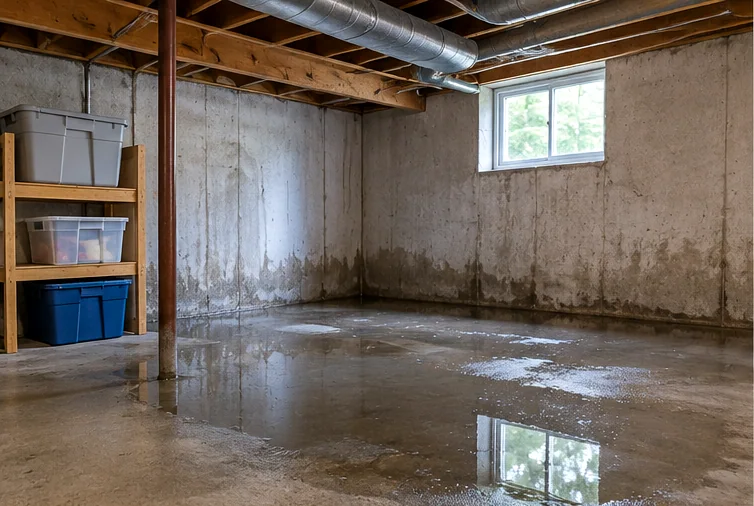
What is the First Thing to Do If Your Basement Floods?
The first thing to do is to stop and think about safety before you do anything else. The most common serious injuries in basement floods come from people who walk into the water to reach a breaker, pull out an appliance or save belongings. Water hides electrical faults, it hides broken glass, and it can hide weakened flooring. If the water in your basement is in contact with any outlet, wire, extension cord, electrical panel, major appliance or light fixture, treat the space as electrified until a qualified person says otherwise. The CDC advises homeowners not to operate switches or electrical tools while standing in water, and to have damaged electrical equipment assessed before being put back in service.
Next, think about air. If you smell gas at all, leave the building and call the gas utility or emergency services from outside. If the water is coming from a sewer line or looks or smells like wastewater, keep people and pets out of the room entirely because floodwater can contain sewage and other contaminants.
Only after those checks does anyone go near the water. If you can safely stop an incoming plumbing supply by closing a shutoff valve from a dry spot, do that. If the water source is outside, such as heavy rain, do not try to speed things up by starting a gas-powered pump inside the basement. Gasoline engines in enclosed spaces produce carbon monoxide, and CDC guidance is explicit about keeping fuel-powered equipment outside and well away from openings.
What Immediate Safety Precautions Should You Take?
These are the hazards that actually hurt people during a basement flood. Each one has a short rule.
| Hazard | What to do | What not to do |
|---|---|---|
| Standing water near outlets, panels or appliances | Stay out of the water. Have an electrician or the utility isolate power from a safe location if the panel cannot be reached dry. | Do not walk into water to reach a breaker. Do not pull a cord. |
| Gas odor | Leave the building, then call the gas utility or emergency services from outside. | Do not switch lights on or off inside. Do not light anything. |
| Suspected sewage | Keep people and pets out. Wait for contaminated-water cleanup. | Do not step through it to grab belongings. |
| Deep water with saturated soil outside | Pump the water down gradually with qualified guidance. | Do not pump a deep basement dry while the yard is still saturated. |
| Fuel-powered pumps or generators | Operate them outdoors, well away from windows, doors and vents. | Never run fuel equipment inside the basement. |
| Weak or damaged flooring | Assume unknown footing. Step carefully, from solid areas only. | Do not jump down into standing water. |
If a basement contains an electrical panel in standing water, the right path is a qualified electrician or the utility isolating power upstream. Do not test the panel yourself with a stick or any other improvised approach. The widely circulated advice to use a non-conductive object to flip a wet breaker is not safe to follow and we do not recommend it.
How Do You Stop Water From Coming Into the Basement?
How you stop the water depends on where it is coming from. The main sources and their responses:
- Burst supply line or appliance line. Close the water shutoff at the fixture if accessible from a dry location. If it is not, close the main house shutoff. A plumber handles the actual pipe repair; cleanup follows.
- Water heater or heating-system leak. Close the cold-water supply to the appliance and, if safe, kill the fuel supply. Treat the area as electrically suspect if the unit is on its own circuit.
- Sewer backup through a floor drain or toilet. Stop using any water in the house (flushing, laundry, dishwashers). The source is downstream in the sewer system. A plumber or the wastewater utility is the right call; keep people out of the water.
- Sump pump failure. If the pump stopped because of a power outage and the utility can restore power safely, that solves part of it. If the pump itself is faulty, it is a pump specialist's job; cleanup is a separate scope.
- Rain and surface runoff. You cannot stop the storm. You can clear a visibly blocked window well or downspout outlet if that can be done safely. The real cleanup starts after the rain lets up and conditions are safe.
Read our water source guide for the diagnostic clues that point to each source, and our who to call guide if you are not sure which trade should respond first.
How Should You Document the Flood for Insurance?
Documentation taken at the start of a flood is worth more than documentation at the end. By the time a contractor has pumped, dried and cleaned, the evidence of what actually happened is gone. If you can do this safely from the doorway or from a dry spot, do it before any water moves.
- Photograph the water with something in frame for scale, such as a baseboard or a step.
- Photograph the suspected source if visible from a safe place, such as a dripping ceiling spot, a puddle near a water heater or water rising at a floor drain.
- Photograph affected belongings in place before anyone moves them.
- Note the date and the approximate time the water appeared, and when it stopped coming in.
- Keep receipts for any emergency measures, equipment rental or plumber callouts.
The California Department of Insurance recommends documenting damage and keeping records of repair estimates. Those records are what an adjuster uses to assess the claim.
When Do You Need Professional Basement Flood Remediation?
Immediate safety precautions after a basement flood are the homeowner's job. Everything after that depends on how bad the flood is and what the water is. A small, clean-water puddle on bare concrete that you caught in minutes is a different situation from several inches of sewage-affected water in a finished basement that sat overnight. Professional help is usually appropriate when any of the following are true:
- Water is in contact with electrical equipment, outlets or a service panel.
- The water is sewage, contains visible debris or came from outside flooding.
- Water has reached drywall, insulation, carpet padding or subfloor.
- More than a small area is affected, or the water sat for more than a few hours.
- You cannot identify or stop the source.
- Any structural movement, bowing walls, or ceiling sag is visible.
See the full decision checklist in our DIY vs professional cleanup guide. When you are ready, our water extraction service and structural drying service cover the professional path for the first two stages.
What Changes in California Specifically?
Most emergency steps are the same anywhere in the country. California adds three specific considerations. Winter atmospheric-river storms can produce enough runoff to saturate soils for days, which is why rapid pump-down in a deeply flooded basement can be structurally risky. Post-wildfire debris flows in parts of Southern California can carry sediment and ash into lower rooms, changing the water category. And California's homeowner flood insurance picture is unusual: standard homeowners policies generally exclude external flooding, and the National Flood Insurance Program carries specific basement coverage limitations, so the source of the water matters heavily for a claim.
The California Department of Water Resources documents river, flash, coastal, alluvial-fan and debris flow mechanisms across the state, and winter atmospheric rivers as a significant precipitation driver. Not every California city faces every mechanism; the one that applies to your property depends on where you live.
Sources referenced
- CDC flood safety guidance (electrical hazards, fuel-powered equipment)
- EPA Flooded Home resource (drying timelines, contamination)
- California Department of Insurance (flood coverage advisory)
- California Department of Water Resources (flood mechanisms and atmospheric rivers)
Frequently Asked Questions
What is the first thing to do if my basement floods?
Stop and think about safety before anything else. Keep people and pets out of water that touches outlets, wiring, panels, cords or appliances. Smell for gas; if you smell it, leave the building and call the gas utility from outside. Once safety is confirmed, stop an accessible water source if you can from a dry location, document the damage with photos, and then arrange cleanup.
Is it safe to enter a flooded basement?
Not until electrical, gas, contamination and structural hazards have been ruled out. The CDC advises against operating switches or electrical tools while standing in water. If sewage or external floodwater is involved, treat the area as contaminated and keep people out.
Should I shut off the power to a flooded basement?
Yes, if you can reach the panel safely without standing in water. If the panel is in or near the water, call a qualified electrician or the utility instead. Do not walk through water to reach a breaker.
Can I use a gasoline pump to remove basement water?
Not inside the basement. Fuel-powered pumps and generators produce carbon monoxide, and CDC guidance is explicit about operating them outdoors and away from openings. An electric submersible pump on a dry, properly grounded circuit is the usual safe option.
How quickly do I need to start cleanup after a basement flood?
As soon as it is safely possible. EPA guidance recommends cleaning and drying wet materials within about 24 to 48 hours where possible to limit mold risk. That window is about the mold risk, not the total restoration timeline.
Do I need to document the flood before cleanup starts?
Yes. Take photos of the water in place, the suspected source, and affected belongings before anything moves. California's Department of Insurance recommends documenting damage and keeping records for the claim. These photos are much more useful than photos taken after cleanup.